


Where Does the Water Go? Farmscape’s Approach to Drainage and Rainwater
 Lara Hermanson

In California, we spend a lot of time thinking about landscapes in dry weather. But this year, there’s another reason to think about water.
El Niño is strengthening in the Pacific, bringing the possibility of a wetter winter ahead. I’ve always believed that drainage is one of the things that separates a good landscape from a truly resilient one. Irrigation and thoughtful plant selection are key, but if you can master drainage, your landscape will thrive—especially in a heavy El Niño year.
While no forecast can tell us exactly how much rain will fall on any one property, it’s a good reminder to ask a question every landscape eventually has to answer:
Where does the water go?
When rain arrives, it hits roofs, moves through downspouts, crosses patios and pathways, follows slopes and collects in low points. How a landscape handles that water can make the difference between a welcome winter rain and standing water, erosion or damage.
At Farmscape, we think about water as part of the landscape itself. Rather than trying to move it offsite as quickly as possible—an outdated approach that can contribute to stormwater runoff—we look for opportunities to slow it down, spread it out and allow it to soak into the landscape.
I like to think of winter rains as filling up your “soil moisture savings account,” sending water feet into the landscape and storing moisture that plants can draw from when dry weather returns.
START AT THE ROOF
A good drainage plan starts with understanding where the water comes from.
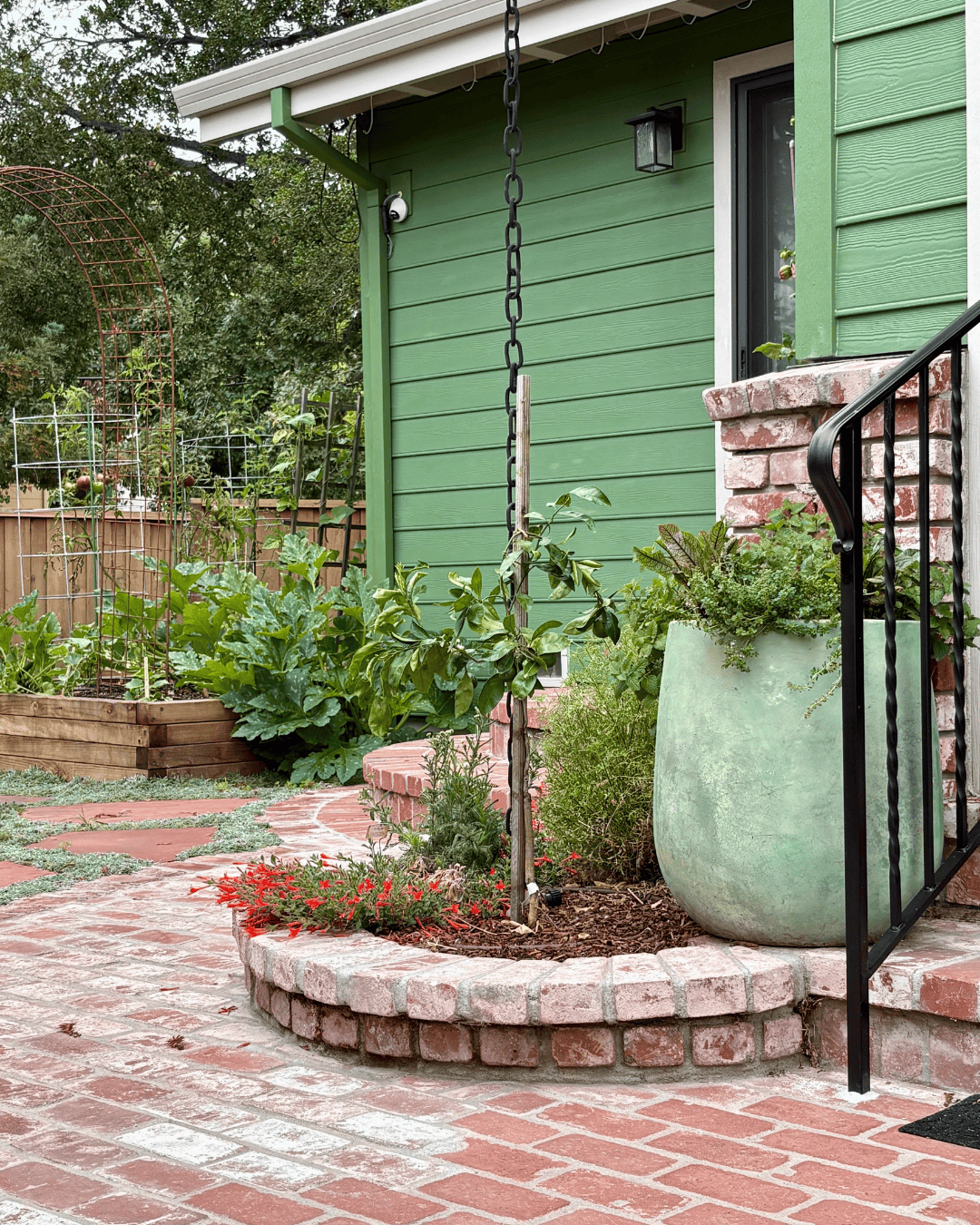
We begin by looking at the size of the roof and following the path of water to the downspouts. At many properties, water leaves the downspout, hits a small splash block and then…that’s it.
During heavy rain, that water can become a temporary river, following gravity wherever it leads—to the foundation, across the lawn or out into the street.
At Farmscape, we pick up where the downspouts leave off, whether that means connecting them to another drainage solution or directing water toward an area where it can safely slow down and infiltrate.
FOLLOW THE LAND
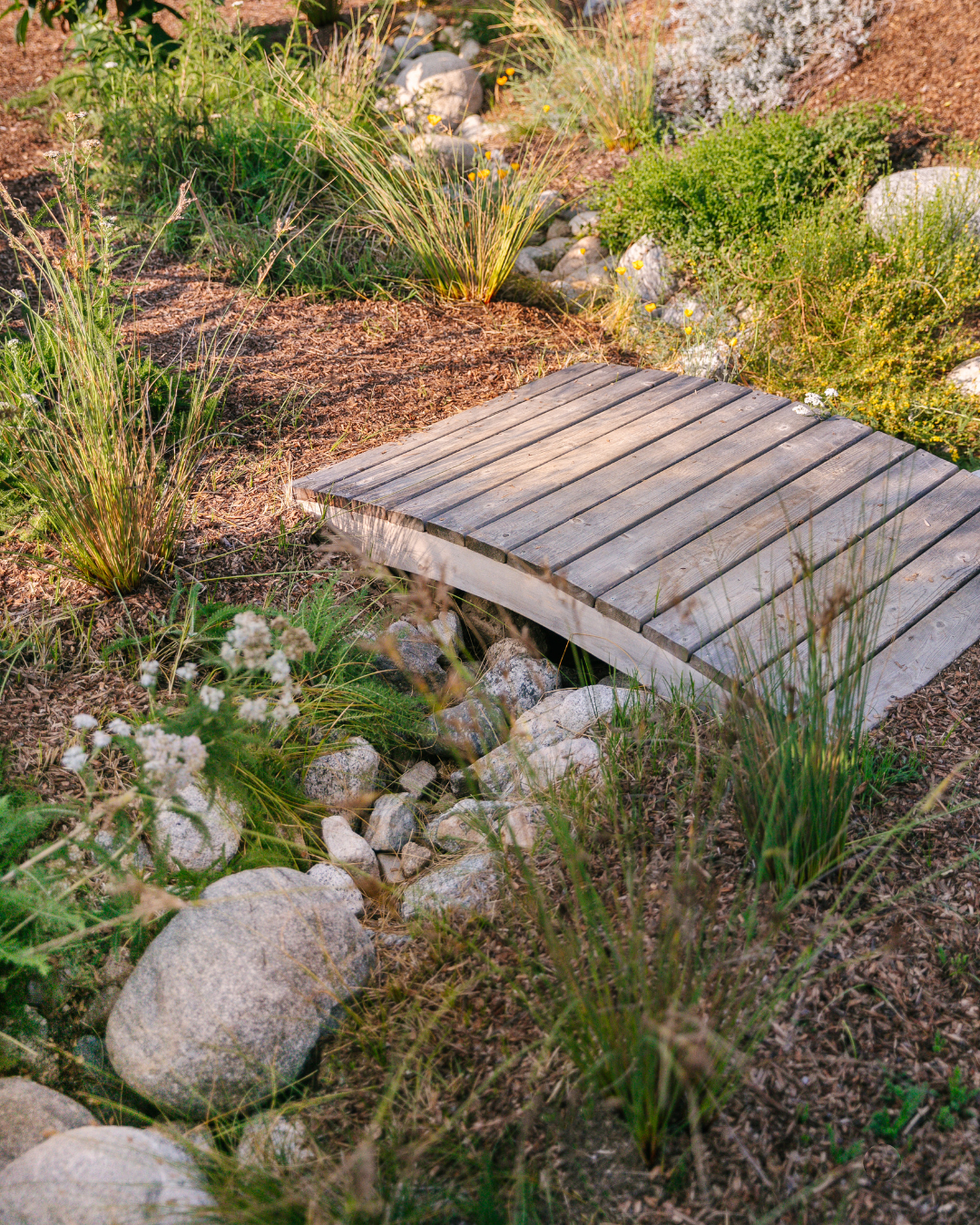
For centuries, people have found ways to slow, capture and store rainwater in the landscape. Today, we regularly use two simple approaches based on the same principle: keep water onsite and give it somewhere useful to go.
Swales use thoughtful grading to guide water through a property, even when the change in grade may be almost imperceptible. These shallow channels intercept runoff, slow its movement and direct it toward a more appropriate destination.
The idea is simple: water will find a path through a landscape. Good grading helps determine what that path will be.
Percolation pits follow a similar principle. We can direct water from downspouts into hand-dug, gravel-filled pits, where it can slowly infiltrate and hydrate soil several feet deep. Located near thirsty trees or other plantings, they can put rainwater to work while helping prevent mud and mulch from washing across the property.
NURTURE BEAUTY
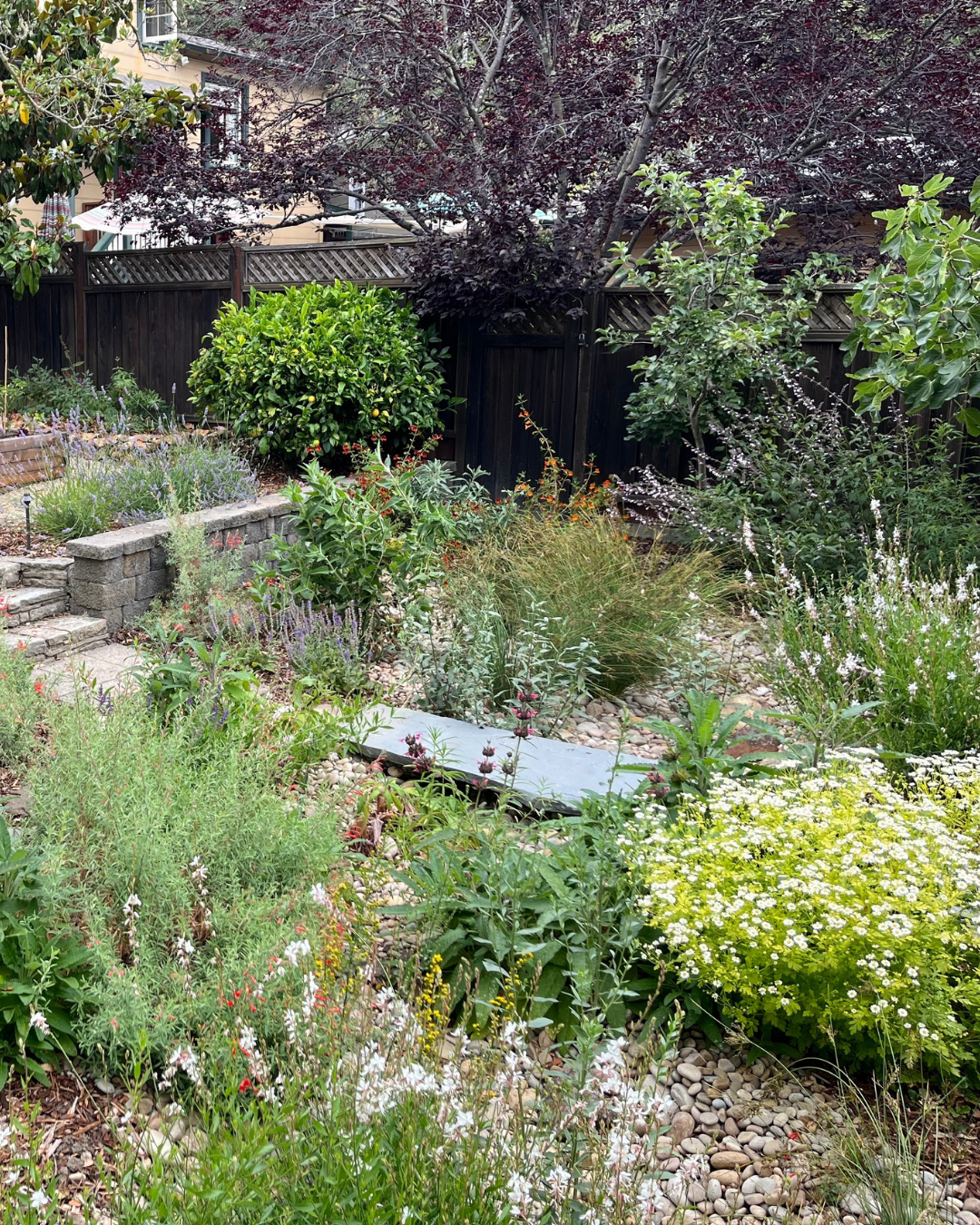
Rain gardens create intentional places for runoff to collect temporarily, giving water time to soak naturally into the ground rather than immediately flowing off the property or overwhelming another area.
At this Oakland Hills project, downspouts feed a man-made channel where there was once unused lawn. The water slowly infiltrates, allowing water to reach deep into the soil around the surrounding orchard and pollinator garden.
That stored moisture helps reduce irrigation needs during hot summers while supporting fruit trees, flowering plants and the pollinators that depend on them.
SOAK IT IN
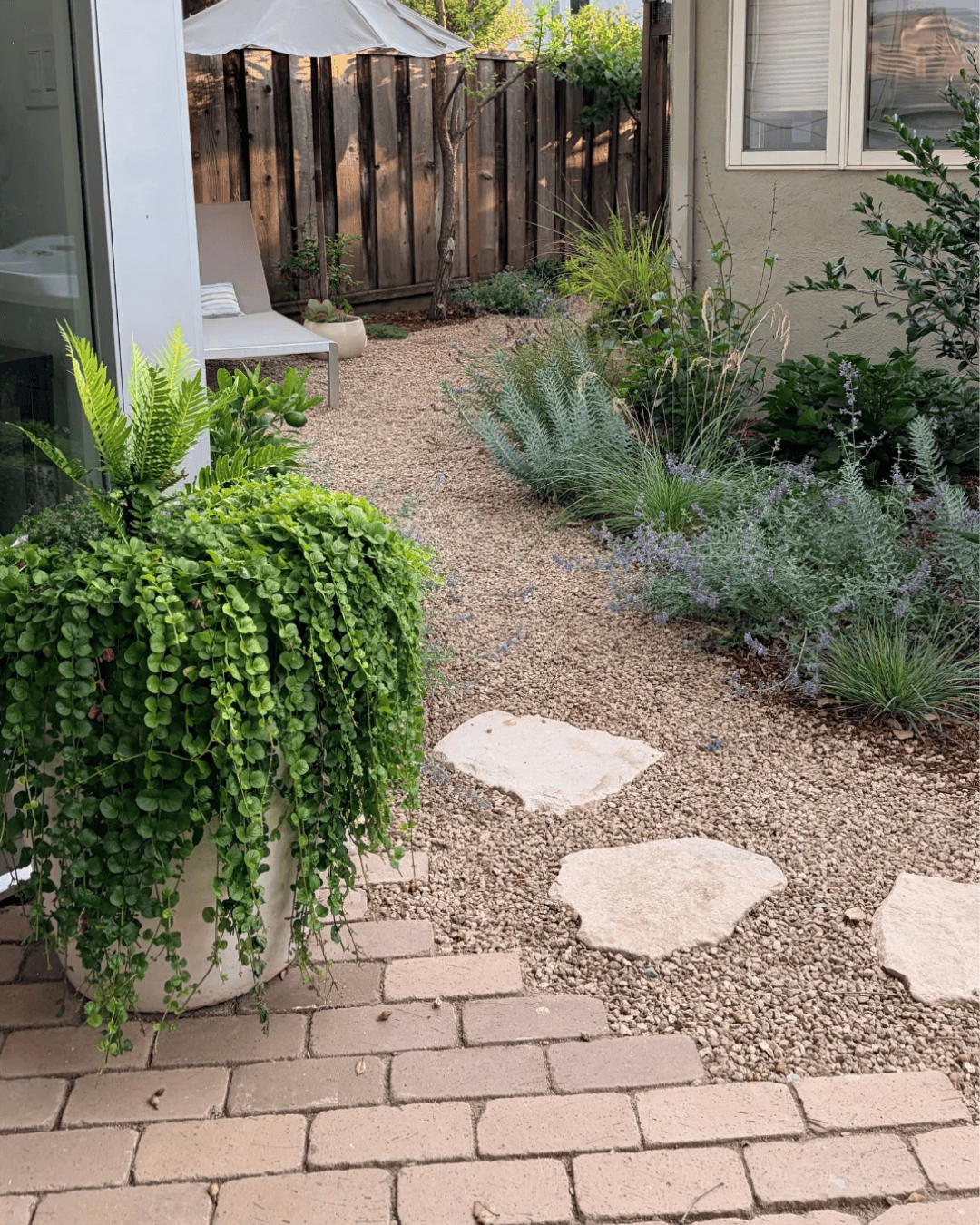
Traditional hardscape creates an impermeable surface. Instead of soaking into the soil, rainfall can move across it in sheets, creating runoff, carving channels and carrying mulch along with it.
Permeable surfaces offer another option. Gravel, permeable pavers and other porous materials can create functional patios, pathways and gathering spaces while allowing rainfall to filter through the surface and into the ground below.
In fact, permeable hardscape is the only kind we install at Farmscape. It allows the practical needs of a landscape—how we move through it and live in it—to work together with the natural systems already at play.
THE FARMSCAPE APPROACH TO WATER
There isn’t one drainage solution that works for every landscape. Often, there isn’t even one solution for an entire property. What matters is how those pieces work together.
At Farmscape, we look at drainage as part of the whole landscape—alongside food, habitat, outdoor living, irrigation, soil and long-term stewardship. We consider where water enters a property, how it moves through it, where it creates challenges and where the landscape may be able to put it to use.
Because designing for California means thinking about water when there isn’t enough of it—and when there’s suddenly a lot.
LET’S GET STARTED
Ready for the rain?
If standing water, erosion, overflowing downspouts or other drainage issues have you wondering how your property will handle the next big storm, now is a good time to take a closer look.
Farmscape can help you understand how water moves through your landscape and design solutions that work with your property as a whole.